
Air Canada provides comprehensive, complimentary wheelchair and mobility assistance across its global network, including domestic Canadian routes, transborder US flights, and international destinations. The airline requests that passengers submit their special assistance requirements at least 48 hours prior to departure so airport teams can coordinate the necessary equipment.
Operating out of its primary hubs at Toronto Pearson (YYZ), Montreal-Trudeau (YUL), and Vancouver (YVR), the airline provides guidance from terminal entry directly to your aircraft seat. Air Canada Wheelchair Assistance operates in strict compliance with the Accessible Transportation for Persons with Disabilities Regulations (ATPDR) under the Canadian Transportation Agency (CTA), alongside international frameworks such as the US Air Carrier Access Act (ACAA).
Note: You don’t need to provide medical documentation to use basic wheelchair services; just let them know you need additional help during your trip.
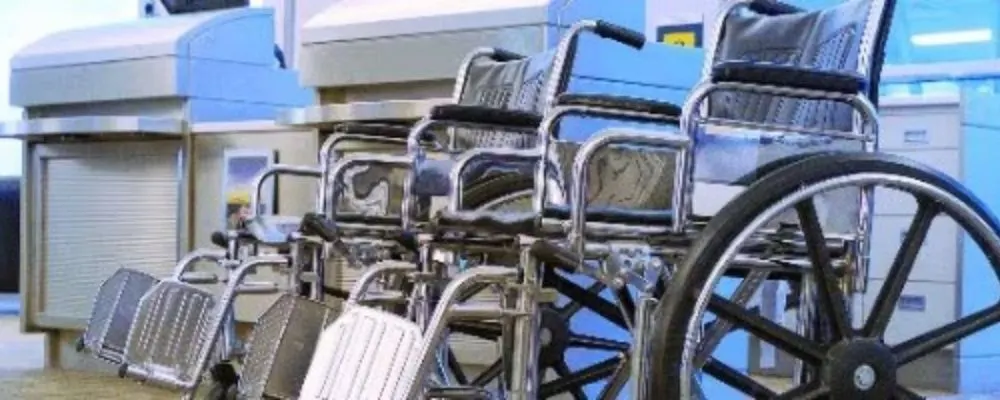
Does Air Canada have Wheelchair Assistance?
Yes, Air Canada offers wheelchair assistance services for passengers who require mobility support during their travels. These services are available to travelers with disabilities, medical conditions, temporary injuries, seniors, or anyone who needs physical support throughout the airport.
Air Canada’s wheelchair assistance includes:
- Dedicated assistance at airport check-in counters.
- Wheelchair escort through security checkpoints and departure concourses.
- Priority pre-boarding and aisle-chair support directly to your seat.
- Escort and gate transfer assistance during flight connections.
- Deplaning support and escort to baggage claim and arrival exit zones.
Passengers can request wheelchair assistance services when booking, add them after purchase via Manage My Booking, or request help directly at the airport counter. Submitting requests at least 48 hours in advance ensures equipment and handlers are ready on arrival.
How Does Air Canada Wheelchair Assistance Work?
Air Canada arranges trained staff to provide the help you need, ensuring full support. Planning a trip is easier when you understand how the process works.
- You get to the Airport: Air Canada staff will be there if you ask for it at any of these points: curbside, counter check-in, or through the accessibility desks.
- Security Screening: Your aide will help facilitate your passage through security. Also, Canadian Air Transport Security Authority (CATSA) has certain guidelines on wheelchair users, which might involve pat-downs or chair inspections.
- At the Gate: A representative will bring you to the gate and will make sure you are comfortably seated until it is time to board.
Boarding: Those passengers who require help at the airport will usually get the chance to board first so that they have some time to get ready. - Connecting Flights: At layovers, a helper will meet you when you get off the plane and guide you to your next gate.
- Arrival and Exit: When you arrive, the staff will lead you from the airplane to the luggage claim area and curbside pickup.
How To Request Wheelchair Assistance?
Air Canada wheelchair services are provided free of charge. Requesting early will help them prepare in advance. Air Canada will consider same-day requests in case of any emergency.
Online Booking
Here are the steps for online booking:
- Go to aircanada.com to search for your flights.
- In the section of “Who’s Traveling”, click on Accessibility services below the date of birth section.
- Choose “Requiring wheelchair assistance” and select the required kind of service from the list.
- Complete other steps like selecting seats and making the payment.
Modifying an Existing Reservation
Access your Air Canada account online or through the mobile application.
- Go to “Manage Trips” or “My Bookings.”
- Enter your reservation code to view your itinerary.
- Amend passenger information in the “accessibility” section, select wheelchair service, and confirm changes.
Booking by Telephone
Call Air Canada Accessibility Services at one of the following numbers:
- Toll-Free (Canada/U.S.): 1-800-667-4732
- Local (Montreal): 1-514-369-7039
- TTY: 1-833-754-3650
- Video Relay Services (VRS): Available using numbers provided.
Have your reference number handy and give detailed requirements. The agents will make your SSR and provide confirmation.
Traveling with Your Own Mobility Devices
Passengers can travel with personal mobility aids free of charge, and these devices do not count toward your standard checked or carry-on baggage allowance. Under Canadian ATPDR regulations, passengers may bring up to three mobility-related items free of charge.
- Cabin Storage: Small manual mobility aids (canes, crutches, walkers) can be brought onboard if they fit in overhead bins or approved closets.
- Cargo Hold Carriage: Larger manual wheelchairs and all battery-powered mobility devices are stowed securely in the aircraft cargo hold.
Manual Wheelchairs and Walkers
The device can be used throughout the terminal and checked at the gate before boarding. Foldable wheelchairs or walkers that are compact enough to fit into the cabin may be taken on board on an available space basis.
Powered Wheelchairs and Scooters
These devices have to be loaded as cargo and will receive special handling. Important points include:
- Batteries: Use non-spillable sealed lead gel-type (Gel) and absorption glass mat (AGM) batteries if possible. If spillable batteries are used, make sure to disconnect them. Lithium ion batteries (normally up to 300Wh) should be disconnected and brought into the cabin in protective packaging.
- Preparation: Fill out the Powered Mobility Aid Information Form in advance. Include information regarding the make, weight, dimensions, battery type, disconnection process, and any special handling requirements. Prepare two copies, attaching one to your equipment and keeping one copy for yourself.
Contact Air Canada as early as possible to facilitate notification to the loading staff.
Medical Devices, Oxygen, and Requirements In-Flight
Portable Oxygen Concentrators (POCs), CPAP machines, and other battery-operated medical devices are acceptable. Obtain permission from Accessibility Services at least 48+ hours in advance. Have enough batteries for 1.5 times the flight time. Compressed/Liquid oxygen is not accepted. Some conditions will need a Fitness for Air Travel letter.
Traveling with A Partner and Service Animals
The airline allows someone to accompany you whether it is a person or a service animal to ensure a hassle-free trip.
- Companion: Need to be 16 years old or above. The passenger needs to be 8+ years old. Adjacent seating is needed. Reduced or free fares could be available on Canada-U.S. flights, contact Accessibility Services. There is a reimbursement process after travel.
- Service Animals: Only one animal per person (except special cases). File the Service Animal Form 48+ hours before travel. Emotional support animals (ESAs) are not recognized as certified service dogs and must travel under standard pet policies.
Note: Wheelchair assistance is entirely complimentary in accordance with regulations. This includes wheelchair rental, transfer services, personal transport equipment services, etc. Tipping is not mandatory; however, passengers commonly tip.
Special Assistance for Minors and Families
Air Canada offers specialized services to help children and families travel safely and comfortably. These arrangements include support for children traveling alone, with specific age requirements, booking procedures, and flight restrictions to consider before departure.
Unaccompanied Minors Service
Air Canada provides a dedicated Unaccompanied Minor (UM) program to ensure the safety of youth traveling alone:
- Ages 8 to 11: Mandatory enrollment if traveling without an accompanying traveler aged 16 or older on nonstop flights operated by Air Canada or Air Canada Rouge. A standard service fee applies.
- Ages 12 to 17: Optional service. Teenagers may travel independently as young adults or be registered for the UM service upon parental request.
- Service Scope: Staff escort the minor through check-in, security, boarding, and monitor them during flight until hand-off to the designated receiving adult at the destination.
Traveling with Infants and Young Children
Parents can choose between lap-infant travel and purchasing a separate seat, depending on their needs. The airline also provides specific arrangements for child safety seats, strollers, and other essential travel equipment.
- Lap Infants: Children under age 2 can travel on an adult’s lap for free on domestic Canadian routes or at a nominal fare on international routes.
- Approved Child Seats: If a separate seat is purchased for an infant, you may install a transport-approved, forward-facing or rear-facing car seat (bearing Canadian CMVSS 213/213.1 or FAA approval labels) secured by the aircraft seatbelt.
- Stroller & Car Seat Policy: You may check a stroller and a car seat free of charge in addition to your standard baggage allowance. Small umbrella strollers can be gate-checked right at the aircraft door.
Also Read: Air France Wheelchair Assistance
Specific Mobility Services Provided by Air Canada
Air Canada offers customized equipment and administrative help to persons with reduced mobility:
- Airport Wheelchairs: These are standard transport chairs that can be pushed by attendants around the terminals.
- Aisle/Boarding Chairs: These are very slim chairs designed to safely help passengers to be moved to the seat inside the aircraft through the aisles.
- Onboard Wheelchairs: These are wheelchairs that can be used inside the aircraft for moving to and from the lavatories. Usually, they are available on most aircraft.
- Electric Cart Service: This is the provision of carts at major hubs that can be used for longer distances (this is dependent on the availability of the airport).
Tips Before Requesting Wheelchair Assistance
A little preparation before your trip can help ensure a smooth, easy, stress-free flight if you have mobility issues or a temporary disability.
- Seating Arrangements: Select seats in the front rows or with adjustable armrests where available. Arrange this through Accessibility Services 48 hours in advance.
- Hidden Disabilities: Opt for the Sunflower Lanyard Scheme.
- Personal Assistants: Secure adjacent seating and follow all medical approval procedures where necessary.
- Documentation: Have your booking documentation, mobility documentation, and other medical documentation at hand (even if not essential).
- Airport Differences: Large airports such as Toronto Pearson (YYZ), Vancouver (YVR), and Montreal (YUL) are well equipped, while smaller airports are less so.
- In-Flight Considerations: Pre-order onboard wheelchair assistance, meal preference, and help using the washrooms.
Final Thoughts!
Air Canada wheelchair assistance helps passengers with mobility issues to navigate airport terminals, prepare for boarding, transfer to aircraft seats when needed, and complete their arrival journey. Passengers can request the service during flight booking or add it later through the Trips section of the airline’s website.
For a smoother travel experience, submit your request at least 48 hours before departure and check that the assistance details appear in your booking. If you are travelling with a powered wheelchair or need specialised transfer equipment, contact Air Canada Accessibility Services in advance to confirm equipment compatibility and handling arrangements.
Frequently Asked Questions!
Yes. Wheelchair services accommodate permanent and temporary conditions alike. There’s no need to provide any documentation for regular assistance.
Yes. Your companion will be able to follow you from one end of the terminal to another.
Make sure to inform Air Canada of any damage to your device right away, while still at the airport. It’s up to the airline company to take care of repairs and replacements.
No. Free wheelchairs are available from the Air Canada staff upon request. You’re free to use your own chair for extra comfort.
Preferably during booking. In case of an international flight and/or powered mobility aid, call Accessibility Services at least 48 hours in advance.