
Qatar Airways is known worldwide for its high-quality service, including comprehensive, free accessibility and mobility assistance throughout its international network. To ensure a smooth transition from the departure gate to your flight seat, Qatar Airways coordinates a highly structured system of airport guides, exclusive cabin features, and personalized customer service.
Qatar Airways Wheelchair Assistance is operated in full accordance with the federal Air Carrier Access Act (ACAA). Dedicated personnel and specialized equipment coordinate it to meet your medical needs in a dignified, compassionate manner.
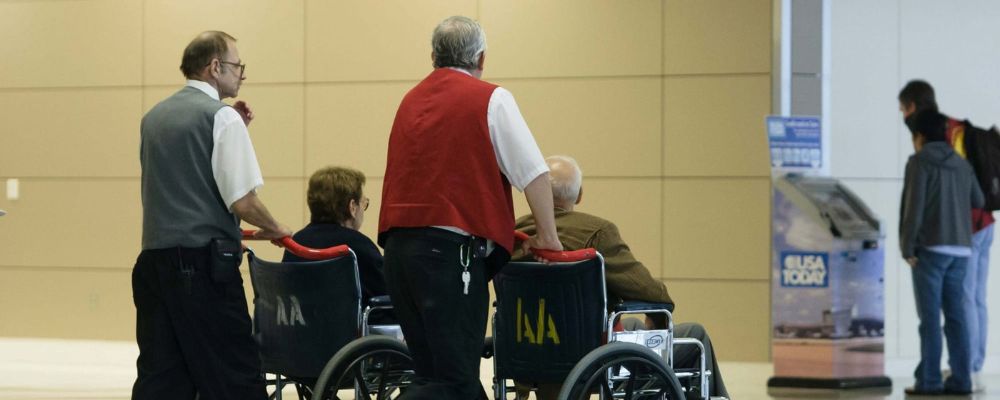
Does Qatar Airways have Wheelchair Assistance?
Yes, Qatar Airways provides comprehensive, complimentary wheelchair and airport assistance at every stage of the journey.
Available Mobility Services by Qatar Airways
- Airport Escorts: A trained ground attendant assists passengers who need help navigating long distances across terminal walkways. This service covers check-in, fast-track security screening, immigration lanes, and guidance all the way to the boarding gate.
- Specialized Boarding Assistance: If an aircraft is parked at a remote airfield stand rather than a standard terminal jet bridge, Qatar Airways utilizes specialized ramp elevators or passenger lift vehicles so travelers do not have to climb outdoor aircraft stairs.
- In-flight Care: Narrow, specialized onboard wheelchairs are carried on all Airbus A330, A350, A380, and Boeing 777 and 787 aircraft. Cabin crew use these devices to assist non-ambulatory passengers moving between their seats and the lavatory doors during flights.
- Cabin Accessibility: Select rows across Economy and Business Class are engineered with movable aisle armrests that flip up completely, allowing for a smooth lateral transfer from an aisle chair into the passenger row.
Core Stages of Qatar Airways Airport Assistance
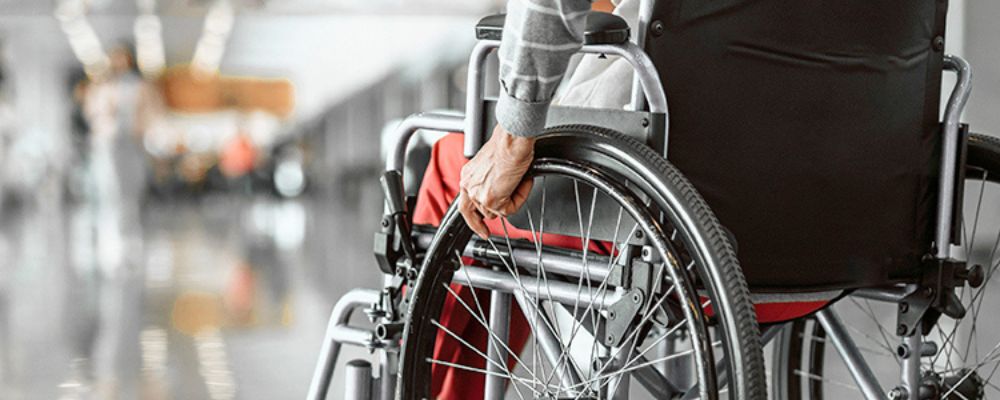
Qatar Airways Airport Assistance is structured into four distinct chronological stages, ensuring full coordination from the moment you reach the departure terminal until you exit your destination gateway.
- Stage 1: Departure Terminal Arrival
Arrive three hours before departure. Request assistance at the check-in counters or main information desks. At Hamad International Airport (DOH), head directly to the dedicated special handling check-in rows. Your assigned attendant will manage your luggage, tag your mobility devices, and escort you through fast-track security and passport control straight to your gate. - Stage 2: Boarding and Aircraft Entry
Passengers with mobility aids receive priority pre-boarding. Your attendant coordinates with gate agents to board you first. If your plane is at a remote stand, Qatar Airways utilizes specialized ramp elevators or passenger lift vehicles to bypass outdoor stairs. Non-ambulatory passengers are transferred into a narrow onboard aisle chair at the aircraft door to reach their seats. - Stage 3: Connections and Transits
To ensure safety and comfort, passengers requiring comprehensive assistance deplane last. During a layover at Hamad International Airport (DOH), a new transit handler meets you at the aircraft door with a terminal wheelchair, navigating elevators and concourse trains to reach your next gate. You can request brief stops at restrooms, shops, or quiet lounges along the way. - Stage 4: Destination Arrival and Exit
Upon landing, you will deplane after the main cabin empties. Ground staff will meet you at the door with an airport wheelchair or return your gate-checked manual device to the jet bridge (where local regulations allow). Your handler then guides you through immigration, assists with retrieving checked bags from the carousel, and escorts you safely to the ground transport pickup area.
Understanding the Service Medical Codes
Qatar Airways categorizes mobility assistance using standard airline industry codes to ensure you receive the precise level of help required:
- WCHR (Wheelchair Ramp): For passengers who can climb or descend aircraft steps and walk independently down the cabin aisle but require a wheelchair to cover long distances across the vast airport terminal hallways.
- WCHS (Wheelchair Steps): For passengers who can navigate the flat cabin aisle to their seat but cannot climb or descend aircraft stairs independently, requiring mechanical or manual lifting assistance when an air bridge is not used.
- WCHC (Wheelchair Cabin Seat): For completely non-ambulatory passengers who require end-to-end support. You will be assisted through the terminal, lifted by steps if necessary, and transferred using a specialized narrow chair to slide directly into your aircraft seat.
Note: If your mobility limitations stem from a complex or recent medical condition, or if you require non-standard medical items like an in-flight stretcher, you must have your doctor complete the official Qatar Airways Medical Information Form (MEDIF) in English. This must be submitted to the airline between 48 hours and 7 days before your departure.
How Do I Request Wheelchair Assistance on Qatar Airways?
To ensure the appropriate equipment and trained ground handlers are assigned to your itinerary, Qatar Airways requires passengers to submit mobility requests at least 48 hours before the scheduled departure time.
- During Initial Booking: When purchasing your ticket on QatarAirways.com or via the mobile app, navigate to the passenger details page and check the “Special Assistance” option to select your specific mobility level.
- Via Manage Booking: If you already hold a ticket, log into the Manage Booking section on the official website or mobile app using your last name and 6-character booking reference code (PNR) or 10-digit ticket number to add the request.
- Customer Service: You can call your local Qatar Airways customer care office or global contact centers directly to have an agent manually input your special service request (SSR) codes.
Qatar Airways Wheelchair Assistance Number
You can call Qatar’s dedicated Accessibility Desk directly at +974 4144 5555. They can log the exact type of assistance you need and answer questions about checking personal mobility devices.
Even if you saved the request in your reservation, you must explicitly identify yourself to a Qatar employee when you arrive. You can do this at the curbside center, the main check-in counter, or the customer service desk to activate your assistance.
Note: Qatar wheelchair assistance cost is nil. Federal regulations prohibit airlines from charging fees for disability-related accommodations. The service, including the use of an airport wheelchair, is free. While tipping is not required, some travelers choose to tip third-party contract attendants as a gesture of appreciation for their service.
Guidelines for Personal Mobility Aids and Assistive Devices
You can absolutelybring your own wheelchair on Qatar Airways. In fact, under the Air Carrier Access Act, you have the right to travel with your personal mobility equipment, and Qatar provides specific accommodations to make the process as smooth as possible.
Defining Mobility Aids vs. Assistive Devices
Qatar Airways distinguishes between different types of supportive equipment to streamline handling and stowage:
- Mobility Aids: Items required directly for locomotion. This includes standard manual wheelchairs (day or sports versions), electric wheelchairs, electric mobility scooters, and Segways (provided the Segway is medically required by a passenger to assist with a mobility impairment).
- Assistive Devices: Secondary medical equipment required for daily living and personal care. This includes items such as walking frames, hoists, shower chairs, and commodes.
Heavy Equipment Guidelines (Wheelchairs Over 75 kg)
Qatar Airways implements specific handling regulations for heavy personal mobility devices to ensure worker safety while maintaining unrestricted travel access for passengers.
- No Maximum Weight Limits: Qatar Airways enforces no strict maximum weight restrictions when passengers with reduced mobility check in their personal wheelchairs.
- Disassembly Rule: For the physical safety of ground handlers, if a heavy wheelchair is designed to be taken apart, it should be disassembled such that the weight of each piece weighs less than 75 kg.
Special Protocols for Flights To and From the United States
Passengers traveling on U.S. routes can take advantage of unique cabin storage options and localized battery regulations enforced in compliance with federal guidelines.
- In-Cabin Storage Priorities: Qatar Airways aircraft feature a designated storage space inside the passenger cabin to accommodate one folding, collapsible, or manual wheelchair or other walking aids (canes, crutches, and walkers). This space is non-reservable and allocated strictly on a first-come, first-served basis. If the cabin closet is full, your device will be securely carried in the aircraft hold instead.
- Spillable Battery Acceptance: Wheelchairs utilizing spillable (wet-cell) batteries are accepted by Qatar Airways only on flight routes directly serving the United States.
Qatar Special Assistance: Battery Safety and Cargo Hold Specifications
All battery-powered wheelchairs and mobility devices must be pre-approved and checked as baggage to be kept in the aircraft hold. Qatar Airways will not accept or transport any battery that is visibly damaged or leaking.
Non-Spillable, Nickel Metal Hydride (NiMH), or Dry Batteries
The handling, removal, and packaging regulations depend strictly on the battery’s specific chemical composition:
- Battery Attachment: If the battery remains attached to the device, it must not contain any free or unabsorbed liquid.
- Removal Conditions: If you choose to remove the battery from your mobility aid, the removed battery—along with any spare batteries—must be packed inside strong, rigid packaging and stored in the cargo compartment.
- Spare Limits: You are permitted to carry a maximum of one spare wet, non-spillable battery or up to two spare nickel metal hydride or dry batteries.
Lithium-Ion Batteries
The airline enforces strict structural rules regarding the containment, carriage, and energy limitations of lithium-ion power packs to guarantee overall flight security.
- Attached Batteries: If the lithium battery remains securely attached to your mobility aid, there is no limit on its Watt-hour (Wh) rating.
- Detached Batteries: If the configuration requires you to remove the battery from your device, the detached battery must not exceed a maximum rating of 300 Wh. The removed battery must be packed in a protective pouch to prevent short-circuiting or physical damage and carried exclusively inside the passenger cabin.
- Spare Limits: You may bring a maximum of one spare lithium-ion battery not exceeding 300 Wh or a maximum of two spare lithium-ion batteries, each with a rating not exceeding 160 Wh. These must be kept inside your cabin carry-on baggage.
Spillable (Wet-Cell) Batteries (U.S. Routes Only)
Passengers transferring with fluid-based hazardous batteries must satisfy intensive structural casing and orientation criteria before loading.
- Preparation: Where feasible, the battery must be fitted with spill-resistant vent caps.
- Mandatory Removal: If your mobility aid cannot be loaded, stowed, secured, and unloaded in a continuous upright position, or if the frame does not adequately protect the battery, it must be removed.
- Packaging Requirements: The removed battery must be loaded in the cargo compartment inside strong, rigid packaging that is completely leak-tight and impervious to battery fluid. The battery must be protected from short circuits, secured completely upright, and surrounded by a compatible absorbent material capable of soaking up its total liquid content.
- Hazard Labeling: The exterior package must be clearly marked with the text “BATTERY, WET, WITH WHEELCHAIR” or “BATTERY, WET, WITH MOBILITY AID.” You must also attach official, physical “Corrosive” and “Package Orientation” (this way up) labels before loading.
Qatar Airways Walkthrough: Step-by-Step Breakdown
To maximize the benefits of Wheelchair Assistance, it is helpful to visualize the exact steps you will take on the calendar date of your flight.
- Pre-Flight Registration: 48 hours before departure
Log in to ‘Manage Booking’ on the official app or website to submit your wheelchair request, or call customer support to register the exact dimensions and battery specifications of your personal device. - Terminal Arrival & Check-In: 3 hours before departure.
Arrive early at the terminal and head to the main information desks or check-in rows. At Hamad International Airport (DOH), bypass standard lines and proceed directly to the dedicated Special Handling Check-in lanes. - Security & Gate Escort: An assigned airport helper tags your checked luggage, secures legal clearance for your personal mobility aids, and guides you through fast-track security lanes and immigration directly to your gate.
- Priority Cabin Boarding: Board the aircraft before general passenger zones open. If your flight uses a remote airfield stand, you will be transported via ramp elevators or passenger lift vehicles to safely enter the aircraft without climbing stairs.
- In-Flight Transfer: For non-ambulatory passengers, the ground crew assists you with a lateral transfer into a narrow, specialized onboard aisle chair at the plane door, moving you smoothly down the cabin aisle to your seat.
- Transit & Layovers: Deplane last after the main cabin empties. During connections at Hamad International Airport (DOH), a new transit handler meets you at the aircraft door with a terminal wheelchair, escorting you across concourse shuttle trains directly to your next gate.
- Destination Arrival: Ground staff meet you at your final destination gate with a transport wheelchair or return your gate-checked manual device to the jet bridge. Your handler then guides you through customs, retrieves your luggage from the carousel, and escorts you directly to the ground transportation pickup area.
Conclusion!
Traveling internationally with limited mobility or special requirements is a highly systematic process with Qatar Airways Wheelchair Assistance. By utilizing their dedicated terminal assistance teams, prioritizing early boarding sequences, and providing robust fleet features like onboard wheelchairs and flexible armrests, the carrier ensures that passenger comfort remains uncompromised. The most important step you can take is to log your request at least 48 hours before your flight and remember to self-identify to a Qatar agent as soon as you reach the terminal.
FAQs
No. Wheelchair assistance at the airport, specialized boarding equipment, and checking up to two personal mobility devices are entirely free of charge.
No. Personal mobility devices are checked as complementary equipment and do not lower your standard ticket baggage limit.
Yes. You can typically use your own manual chair through the terminal, though local airport security rules may sometimes require a swap to airport equipment.
Yes. All Qatar Airways long-haul aircraft are equipped with compact onboard aisle chairs to help you reach the lavatory during flight.
No. Standard mobility assistance does not require medical clearance unless you have an active, unstable medical condition or require specialized in-flight oxygen.